

AhlulBayt News Agency: Iran informed the United Nations that its strikes on United States military bases in the region constitute legitimate acts of self-defense under international law while reaffirming its commitment to maintaining friendly relations with neighboring countries.
Iran’s permanent mission to the United Nations outlined the position in three letters sent Monday to António Guterres, responding to complaints filed by Qatar, Kuwait, and Bahrain regarding Iranian retaliatory attacks on US military facilities in the region.
In the correspondence, Iran’s UN ambassador Amir Saeid Iravani stated that the retaliation followed unprovoked aggression by the United States and Israel against the Islamic Republic.
He said the attacks were carried out in violation of the Prohibition of Aggression, which he described as a binding norm under international law.According to the letters, the assaults included cowardly assassination of the Supreme Leader of the Islamic Revolution Ayatollah Seyed Ali Khamenei, along with the killing of several senior officials and coordinated strikes on civilian infrastructure.
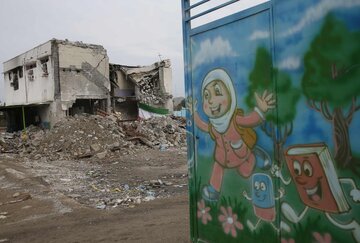
The ambassador said targets included schools, hospitals, sports facilities, residential buildings, and public service centers across Iran.
Iravani reported that the attacks had so far resulted in the deaths of more than 1,300 civilians and widespread damage to civilian infrastructure, including thousands of residential homes, commercial and service facilities, hospitals, Red Crescent buildings, and schools.He also stated that the United States and Israel had used the territory and facilities of several third countries, including Qatar, Bahrain, and Kuwait, to conduct military operations against Iran.
In the letters, the official cited the principle of “sic utere tuo ut alienum non laedas (use your own property in such a manner as not to injure that of another),” arguing that states were prohibited from allowing their respective territories to be used in ways that harm other states.
The envoy also referred to Article 3(f) of the United Nations General Assembly Resolution 3314 (1974), which categorizes “the action of a state in allowing its territory, which it has placed at the disposal of another State, to be used by that state for perpetrating an act of aggression against a third state” as an act of aggression.
He stressed that the Persian Gulf trio’s having permitted their soils to serve as launch pads for American assaults against the Iranian soil bears international legal responsibility, asserting that Iran’s counterstrikes were, therefore, carried out under the right of self-defense.
“The Islamic Republic of Iran in exercising its inherent right under article 51 of the Charter of the United Nations to defend its sovereignty and territorial integrity, and in light of the failure of the United Nations Security Council to discharge its duties and responsibilities under the Charter of the United Nations, has undertaken necessary and proportionate defensive operations against the bases and facilities of the aggressors in the region,” the letters state.
He added that the measures “are lawful under international law and have been clearly and repeatedly warned of in advance through various channels and at different levels.”Message to regional statesHowever, Iravani stated, the Islamic Republic still seeks to maintain normal relations with regional states.
Tehran seeks for such ties to be based on “mutual respect, the principle of good-neighborliness, and respect for each other’s sovereignty and territorial integrity,” he added.
The counteroffensives against the American interests were, accordingly, “in no way against the sovereignty and territorial integrity” of the states hosting those interests, the ambassador concluded.
/129



Your Comment